
 Click main image to view in full screen.
Product Line Profitability Analysis (PowerPoint PPT Slide Deck)
PowerPoint (PPT) 62 Slides


PRODUCT STRATEGY PPT DESCRIPTION
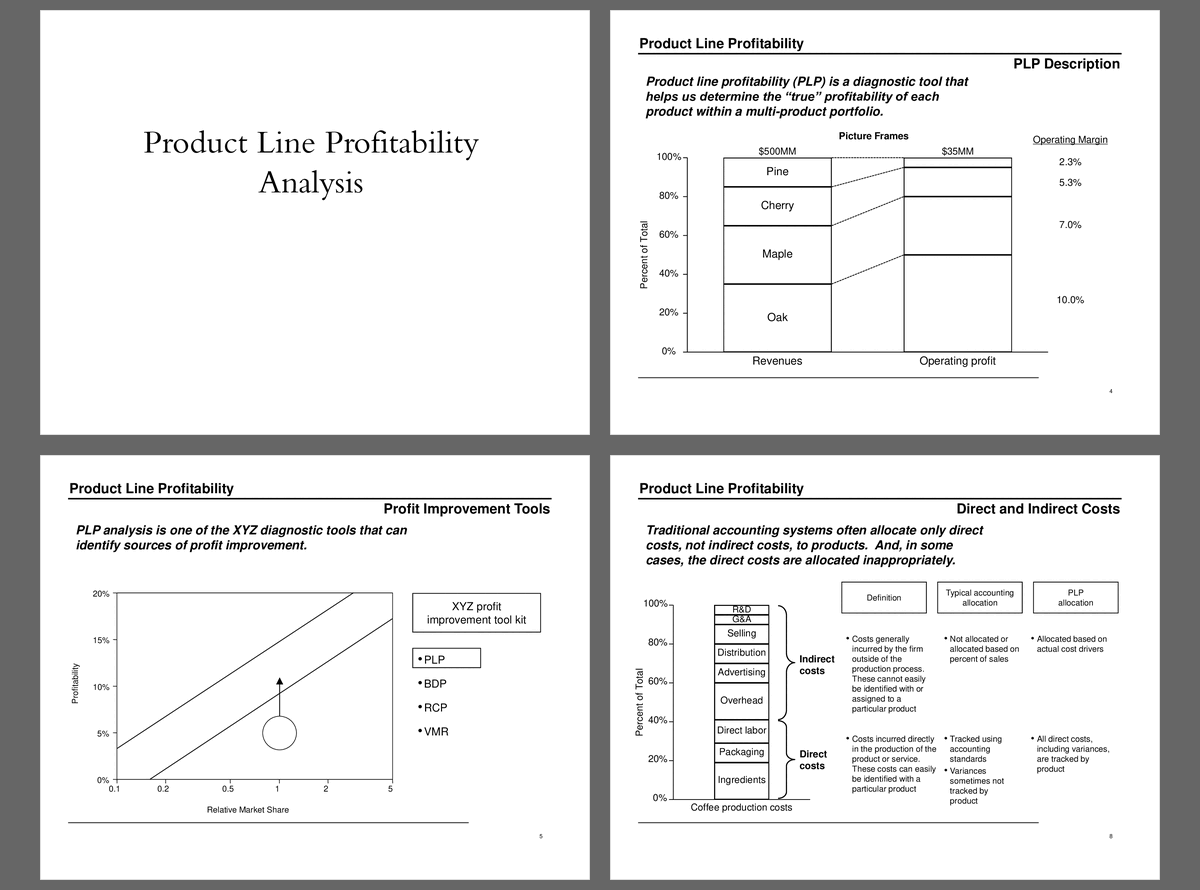
This presentation is a training document on how to determine the true profitability of a product line. Unlike the traditional accounting, this approach assigns costs to products based on relevant cost drivers that can help management make meaningful decisions about product lines.
The deck has 60 slides, detailing step by step analysis through the use of business examples.
An ideal tool for business consultants, corporate managers, analysts and financial professionals.
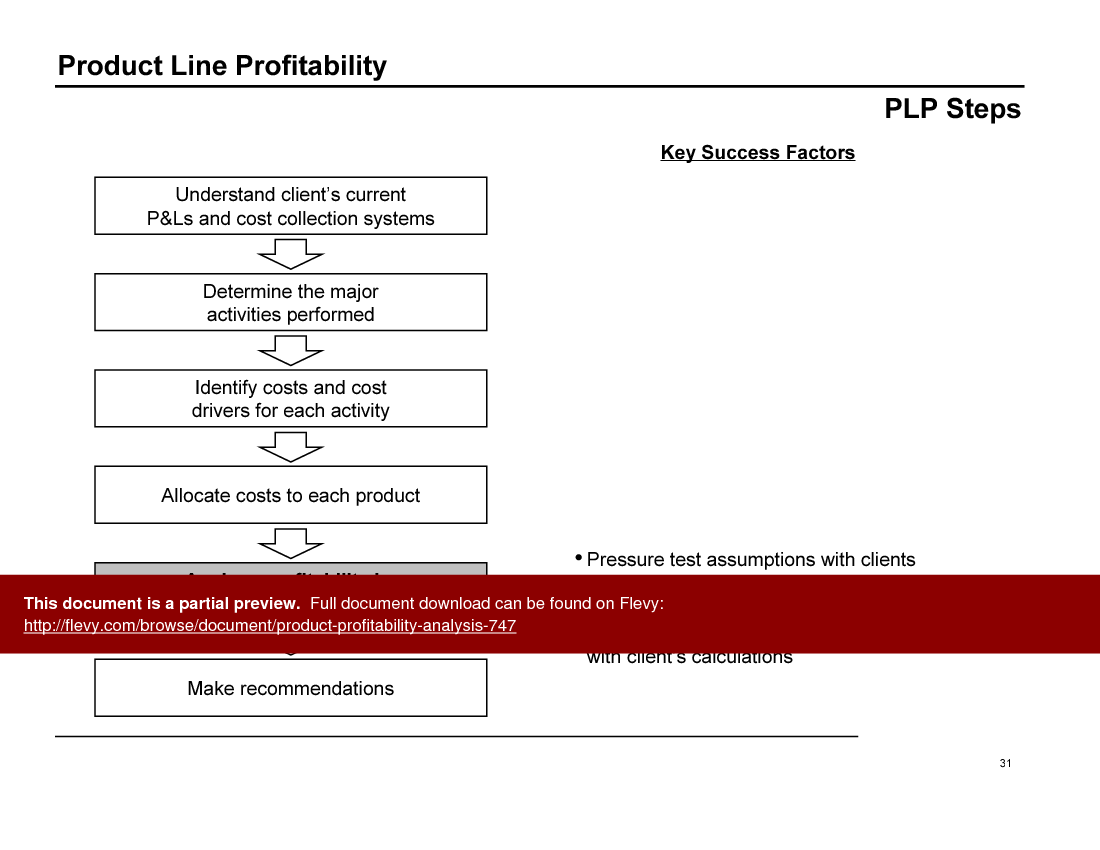
This document provides a comprehensive breakdown of how to allocate both direct and indirect costs to product lines, ensuring a more accurate reflection of each product's profitability. It contrasts traditional accounting methods with the XYZ PLP approach, highlighting the limitations of conventional systems in capturing the true cost dynamics. The presentation includes detailed steps for implementing PLP, from understanding current financial systems to making strategic recommendations based on the analysis.
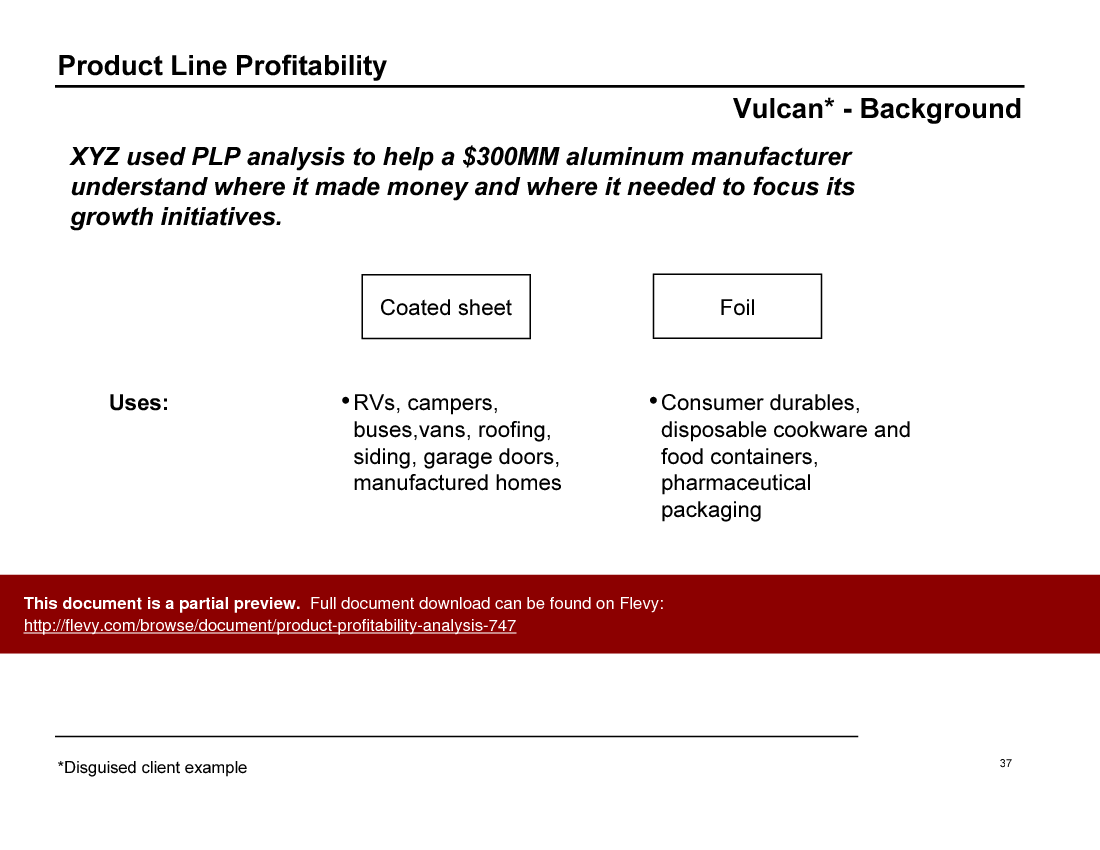
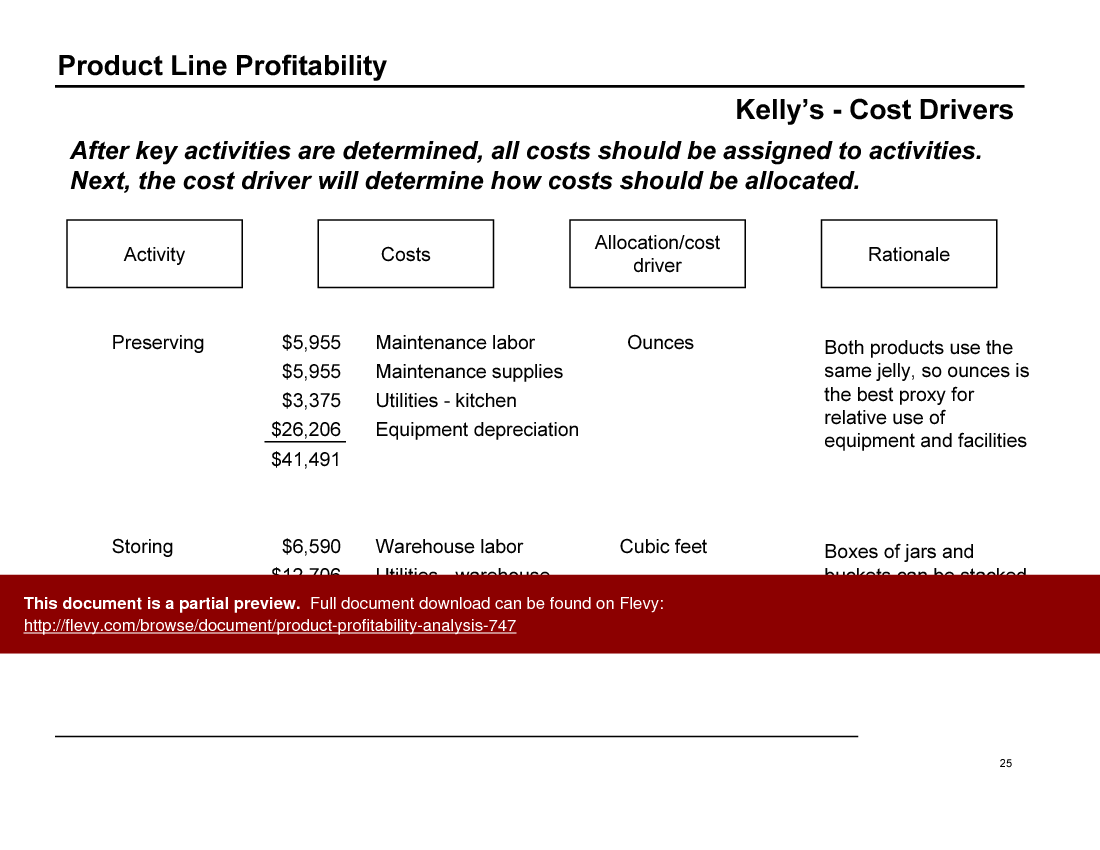
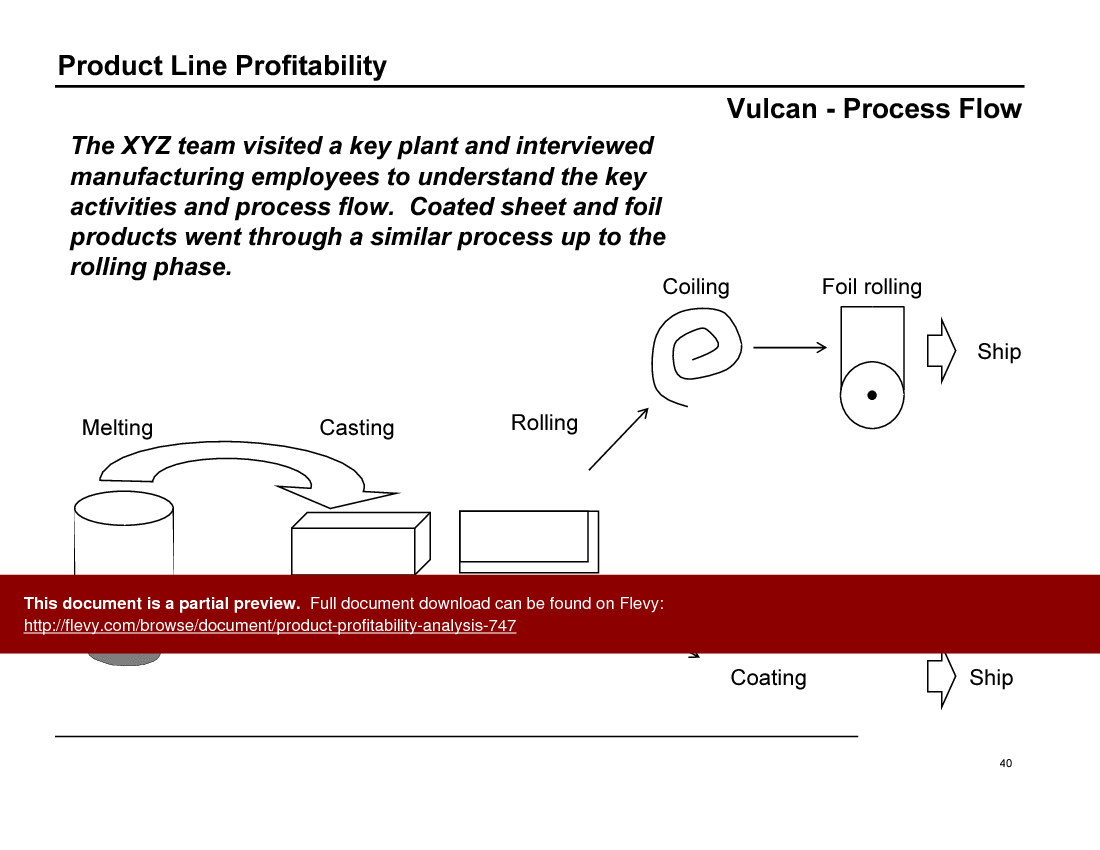
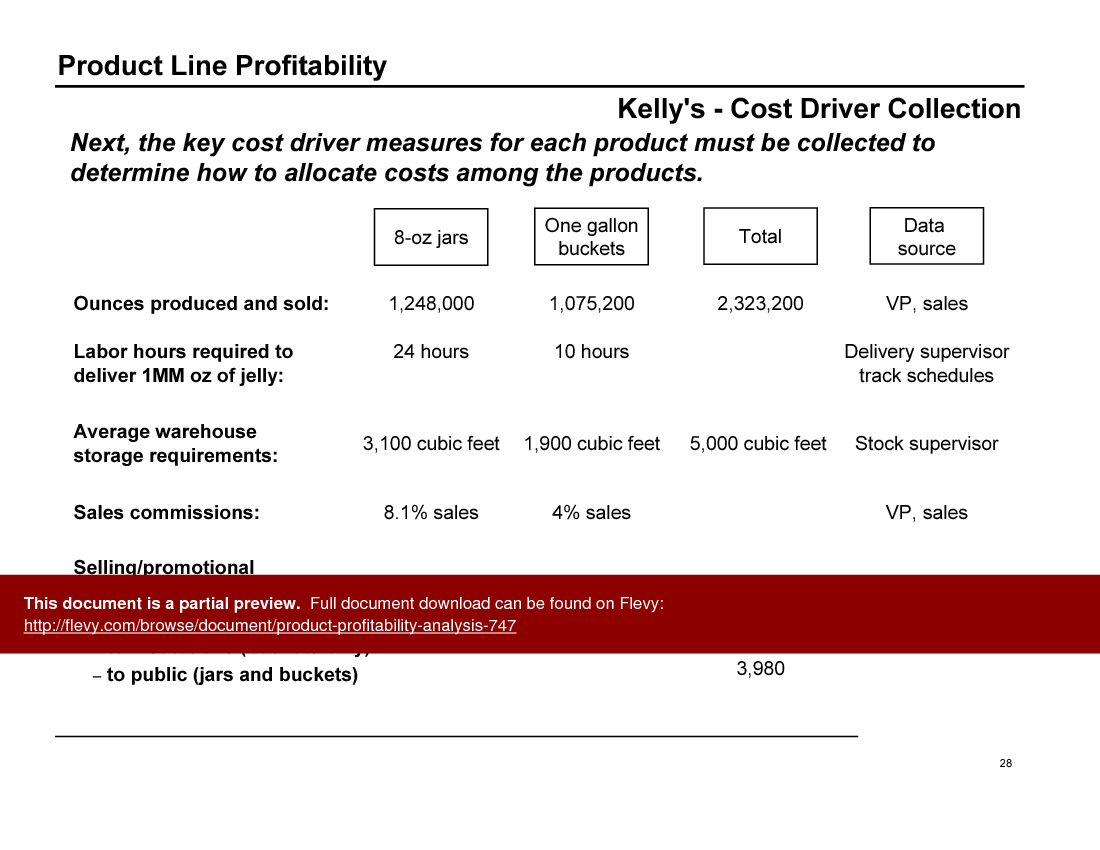
The analysis is supported by real-world examples, such as the case study of an aluminum manufacturer. This case study illustrates how PLP can identify the most and least profitable products, guiding strategic decisions on where to focus resources. The document also delves into the specifics of cost drivers, such as labor hours and storage requirements, providing a granular view of cost allocation.
Key success factors for PLP implementation are outlined, emphasizing the importance of mapping the value chain and tying costs to operations. The document also addresses common challenges, such as capturing all activities that drive costs and reconciling PLP results with overall business profits. These insights are crucial for ensuring the accuracy and effectiveness of the PLP analysis.
The presentation concludes with actionable recommendations for underperforming products, offering alternatives like cost reduction, price increases, and volume growth. These strategies are essential for optimizing product line profitability and making informed business decisions. This document is an invaluable resource for consultants, managers, and financial professionals seeking to enhance their understanding of product line profitability.
Got a question about the product? Email us at support@flevy.com or ask the author directly by using the "Ask the Author a Question" form. If you cannot view the preview above this document description, go here to view the large preview instead.
MARCUS OVERVIEW
This synopsis was written by Marcus [?] based on the analysis of the full 62-slide presentation.
Executive Summary
The Product Line Profitability (PLP) Analysis presentation is a comprehensive 60-slide deck designed to equip corporate executives and consultants with a robust framework for evaluating the profitability of individual products within a multi-product portfolio. This consulting-grade presentation, crafted with precision akin to McKinsey, Bain, or BCG-quality standards (not affiliated), provides actionable insights into cost allocation strategies and profit improvement opportunities. By leveraging PLP analysis, organizations can make informed decisions on pricing, cost reduction, and product line management, ultimately enhancing overall profitability.
Who This Is For and When to Use
• Finance executives responsible for product profitability analysis
• Product managers seeking to optimize product lines
• Strategic planners focusing on cost management and pricing strategies
• Consultants advising clients on profitability improvement
• Operations leaders aiming to align costs with product performance
Best-fit moments to use this deck:
• During strategic planning sessions to assess product line performance
• When evaluating pricing strategies and cost reduction initiatives
• In workshops aimed at improving operational efficiency and profitability
• For annual reviews of product line performance and profitability metrics
Learning Objectives
• Define the concept of Product Line Profitability and its significance in multi-product environments
• Build a comprehensive cost allocation model that reflects true product profitability
• Establish key performance indicators for assessing product line performance
• Analyze profitability by product or product group to inform strategic decisions
• Make data-driven recommendations for pricing, cost management, and product development
• Identify potential paths to improve profitability for underperforming products
Table of Contents
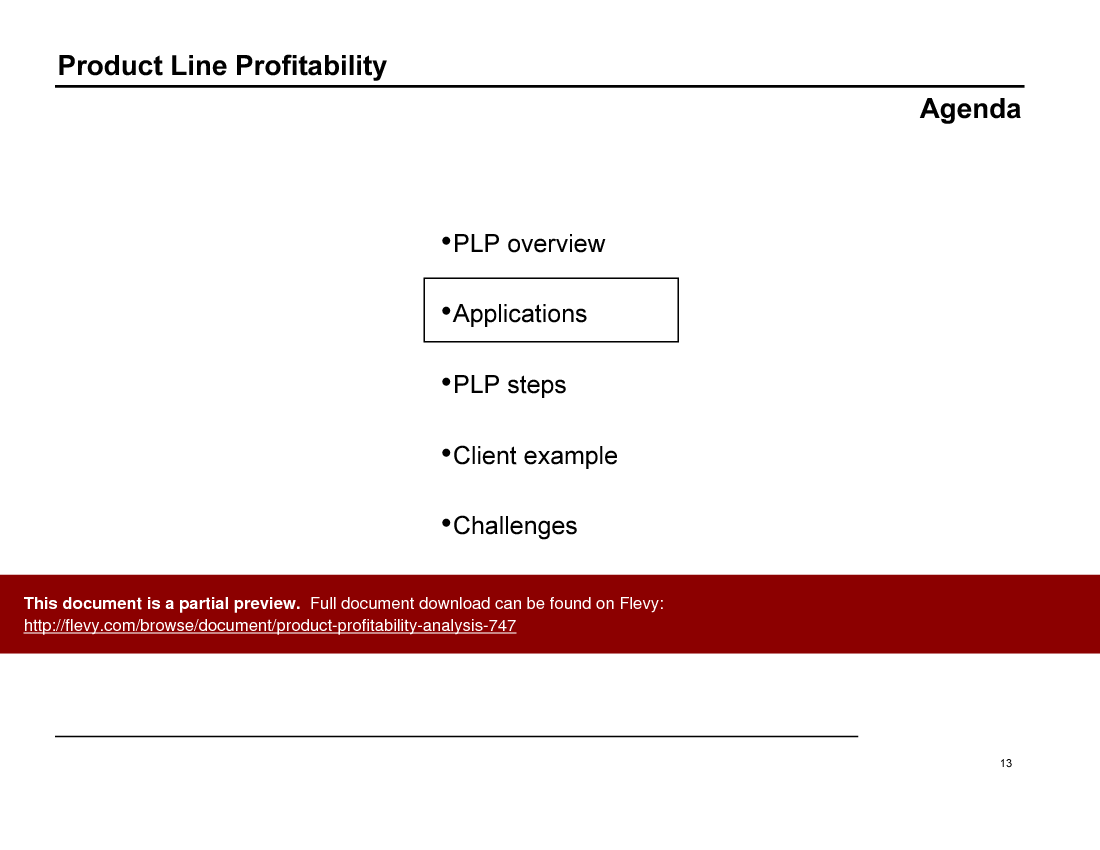
• PLP Overview (page 2)
• Applications (page 14)
• PLP Steps (page 16)
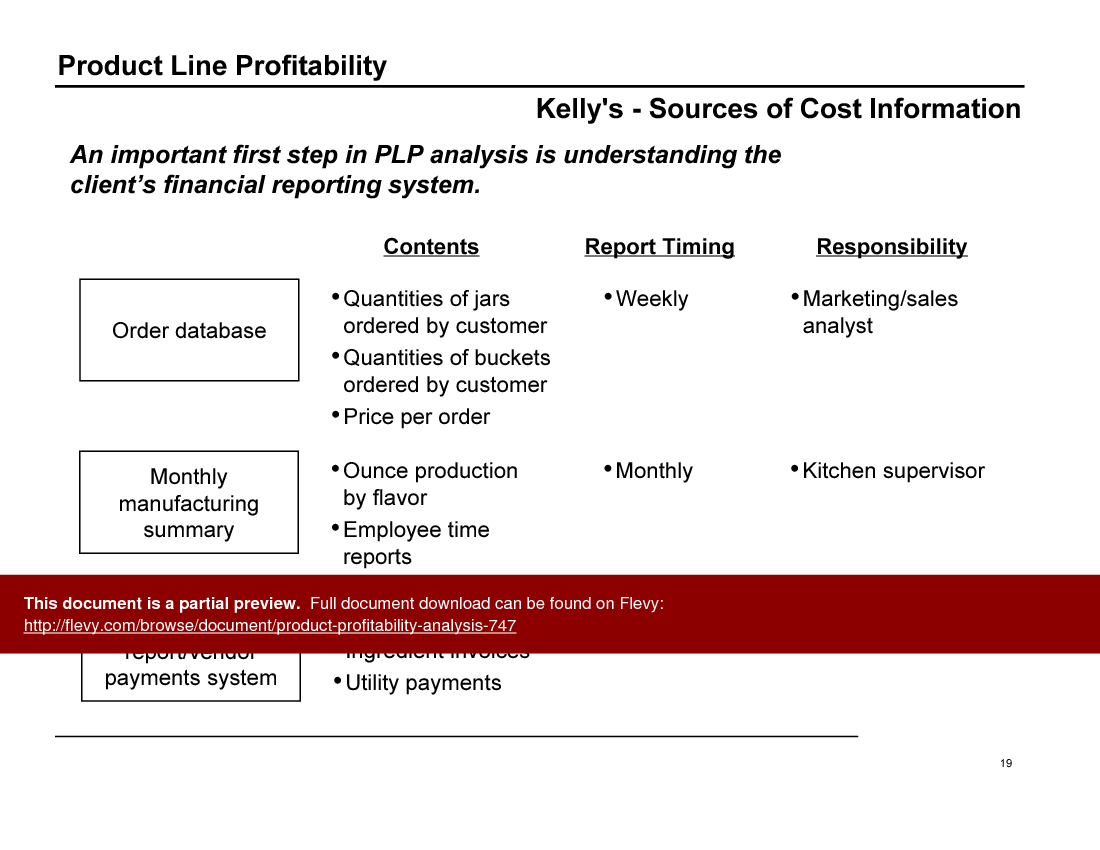
• Client Example: Kelly's Gourmet Jellies (page 17)
• Client Example: Vulcan (page 37)
• Challenges (page 57)
• Key Takeaways (page 59)
Primary Topics Covered
• PLP Overview - An introduction to Product Line Profitability as a diagnostic tool for determining true product profitability within a multi-product portfolio.
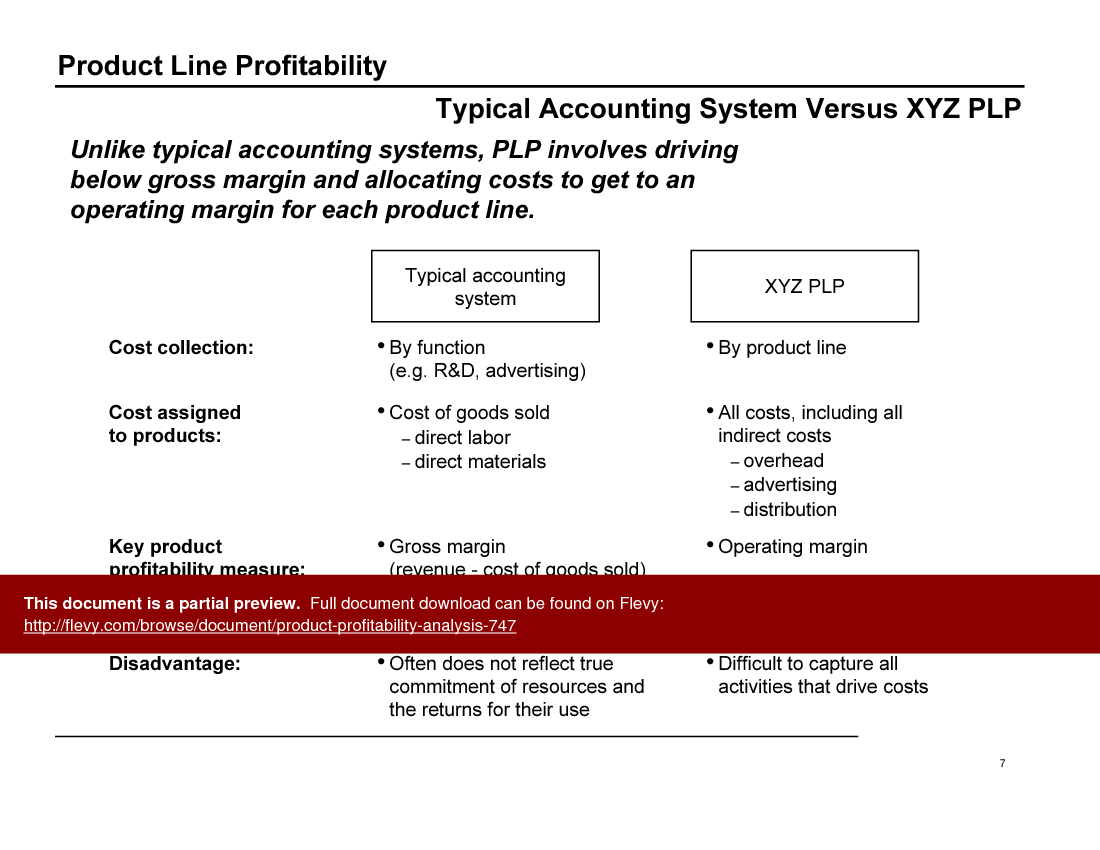
• Cost Allocation Methods - A comparison of traditional accounting systems versus PLP methodologies, emphasizing the importance of allocating both direct and indirect costs.
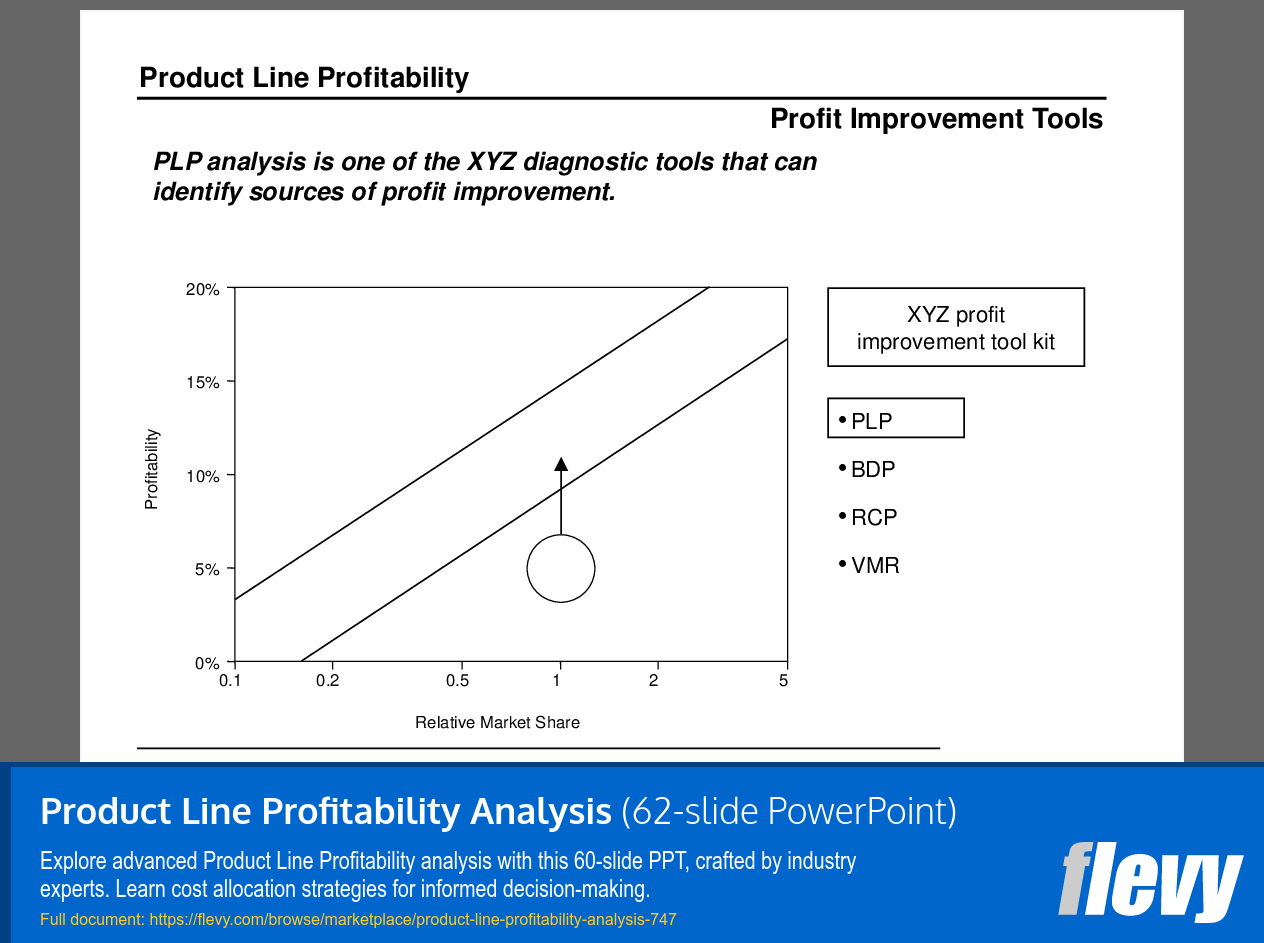
• Profit Improvement Tools - An overview of tools, including PLP, that identify sources of profit improvement across product lines.
• Client Case Studies - Real-world applications of PLP analysis, showcasing how organizations have leveraged insights to enhance profitability.
• Key Success Factors - Essential elements for successful PLP implementation, including data accuracy and stakeholder engagement.
• Challenges in PLP Analysis - Common obstacles faced during PLP analysis and strategies to overcome them.
Deliverables, Templates, and Tools
• PLP analysis framework template for evaluating product profitability
• Cost allocation model to assign direct and indirect costs to products
• Profitability analysis report template for summarizing findings and recommendations
• Case study examples illustrating successful PLP applications
• Key performance indicator (KPI) dashboard for tracking product line performance
• Recommendations checklist for underperforming products
Slide Highlights
• Overview of PLP and its significance in multi-product profitability
• Detailed comparison of traditional accounting systems and PLP methodologies
• Case study results from Kelly's Gourmet Jellies demonstrating the impact of PLP analysis
• Insights from Vulcan's PLP analysis revealing profit contributions by product line
• Key takeaways summarizing the importance of accurate cost allocation
Potential Workshop Agenda
Introduction to Product Line Profitability (30 minutes)
• Overview of PLP and its importance
• Discussion of key concepts and terminology
PLP Analysis Steps (60 minutes)
• Detailed walkthrough of the PLP analysis process
• Group activity: Identify cost drivers for selected products
Case Study Review (45 minutes)
• Presentation of Kelly's Gourmet Jellies and Vulcan case studies
• Group discussion on insights and lessons learned
Action Planning (30 minutes)
• Develop action plans for implementing PLP in participants' organizations
• Identify next steps and assign responsibilities
Customization Guidance
• Tailor the PLP analysis framework to reflect specific industry characteristics and cost structures
• Adjust case study examples to align with the participant's business context
• Incorporate company-specific financial data and metrics into the analysis templates
• Modify the agenda to fit the time constraints and objectives of the workshop
Secondary Topics Covered
• The role of indirect costs in product profitability
• Strategies for managing underperforming product lines
• The impact of pricing strategies on overall profitability
• Best practices for data collection and analysis in PLP
• Techniques for engaging stakeholders in the PLP process
Topic FAQ
What are the key steps in conducting a Product Line Profitability (PLP) analysis?
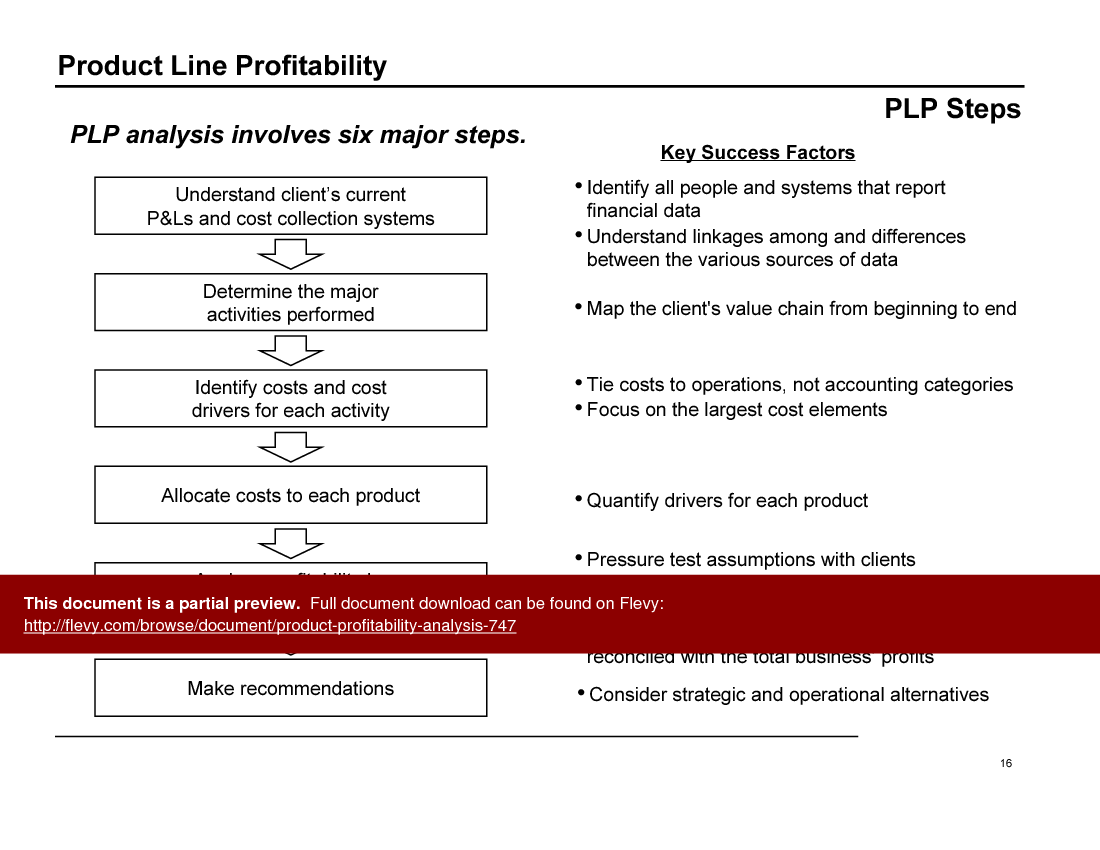
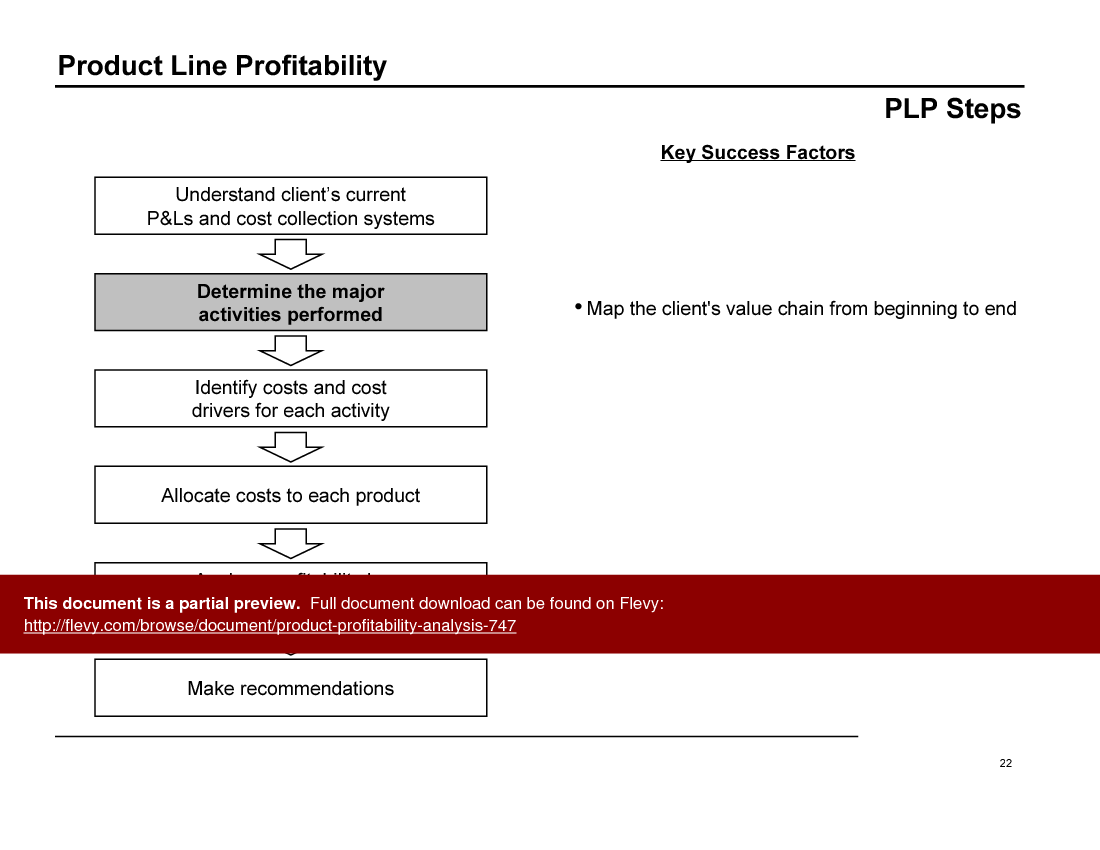
PLP begins with understanding current P&Ls, determining major activities, identifying costs and cost drivers, allocating direct and indirect costs to products, analyzing profitability by product or group, and making data-driven recommendations. These steps are typically described as 6 sequential stages in the PLP process.How does PLP provide a more accurate view of profitability than traditional accounting?
Unlike traditional accounting that often allocates only direct costs, PLP assigns both direct and indirect costs to products based on the activities that drive those costs, using an activity-based costing perspective to reflect true product profitability and cost-driver allocation.What cost allocation methods are used in PLP analysis?
PLP emphasizes allocating costs using activity-based principles and cost drivers tied to operations (for example, labor hours or storage requirements), contrasting with traditional systems that allocate mostly direct costs; the approach centers on activity-based costing as the main method.What should I look for in a PLP toolkit when comparing options to buy?
Buyers should look for a clear PLP framework, a cost allocation model template, profitability-reporting templates, KPI dashboards, case-study examples, and guidance on customization and workshops; essential items include a cost allocation model, KPI dashboard, and profitability report template.How much time and effort can templates save when doing PLP and what do they include?
Pre-built templates provide structured inputs and reporting formats to streamline analysis and workshop delivery; Flevy's Product Line Profitability Analysis package bundles a PLP framework, cost allocation model, profitability-report template, KPI dashboard, and case studies in a 62-slide deck.I need to decide whether to discontinue a low-margin SKU — how can PLP help me make that decision?
PLP will allocate both direct and indirect costs to the SKU using relevant cost drivers to reveal true contribution margin, then surface KPI and profitability metrics and provide recommended actions such as cost reduction, price increases, or volume strategies via a recommendations checklist.How often should an organization run PLP analysis on its product lines?
Regular PLP reviews are recommended during strategic planning cycles, annual product-line reviews, or when significant changes occur in product mix or market conditions; common cadence includes annual reviews and ad hoc analyses during major pricing or portfolio changes.What common challenges arise in PLP projects and what are the critical success factors?
Common challenges include data accuracy, stakeholder buy-in, and the complexity of allocating indirect costs; critical success factors are ensuring reliable data, engaging finance and stakeholders early, and mapping the value chain to tie costs to operations for accurate allocation.Document FAQ
These are questions addressed within this presentation.
What is Product Line Profitability (PLP)?
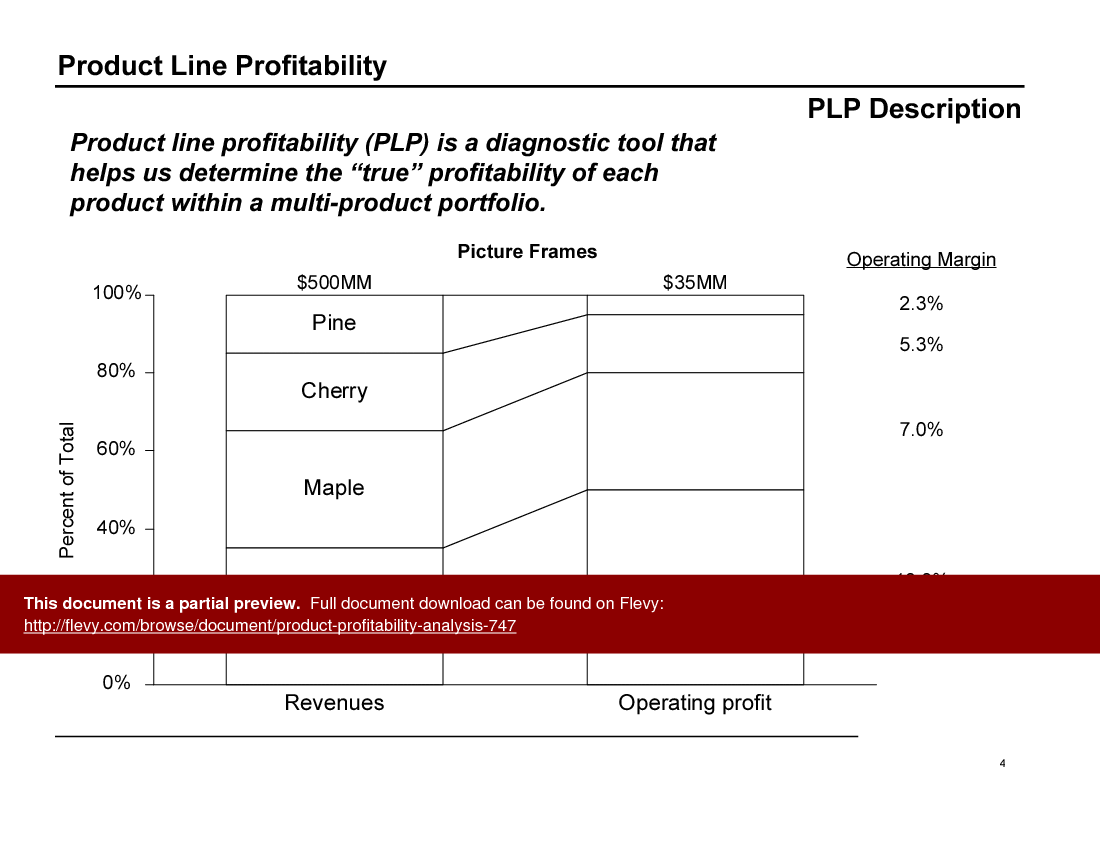
PLP is a diagnostic tool that determines the true profitability of each product within a multi-product portfolio by allocating all costs based on the activities that drive those costs.
How does PLP differ from traditional accounting methods?
Traditional accounting often only allocates direct costs to products, providing a limited view of profitability. PLP includes both direct and indirect costs, offering a more accurate assessment of product performance.
What are the key steps in conducting a PLP analysis?
The PLP analysis involves understanding current P&Ls, determining major activities, identifying costs and drivers, allocating costs, analyzing profitability, and making recommendations.
How can PLP analysis improve decision-making?
By providing a clearer picture of product profitability, PLP analysis enables organizations to make informed decisions regarding pricing, cost reduction, and product line management.
What challenges might arise during PLP analysis?
Common challenges include data accuracy, stakeholder buy-in, and the complexity of cost allocation. Addressing these issues early can enhance the effectiveness of the analysis.
Can PLP analysis be applied across different industries?
Yes, PLP analysis is versatile and can be adapted to various industries, helping organizations understand product profitability regardless of their specific market.
What are some common applications of PLP analysis?
PLP analysis can be used for pricing strategy development, cost reduction initiatives, product line optimization, and performance tracking.
How often should PLP analysis be conducted?
Regular PLP analysis is recommended, especially during strategic planning cycles or when significant changes occur in product lines or market conditions.
What tools are available to assist with PLP analysis?
Various templates and frameworks are available to facilitate PLP analysis, including cost allocation models and profitability reporting templates.
How can organizations ensure successful PLP implementation?
Engaging finance managers early, ensuring data accuracy, and focusing on key cost drivers are critical for successful PLP implementation.
Glossary
• Product Line Profitability (PLP) - A method for assessing the true profitability of products within a multi-product portfolio.
• Cost Allocation - The process of assigning costs to products based on activities that drive those costs.
• Direct Costs - Expenses that can be directly attributed to the production of a specific product.
• Indirect Costs - Expenses that are not directly tied to a specific product and must be allocated based on cost drivers.
• Gross Margin - Revenue minus the cost of goods sold, expressed as a percentage of revenue.
• Operating Margin - A measure of profitability that accounts for both direct and indirect costs.
• Key Performance Indicators (KPIs) - Metrics used to evaluate the success of an organization in achieving its objectives.
• Activity-Based Costing - A costing method that assigns costs to products based on the activities required to produce them.
• Cost Drivers - Factors that cause changes in the cost of an activity.
• Profit Improvement - Strategies and actions taken to enhance the profitability of products or services.
• Stakeholder Engagement - The process of involving individuals or groups who have an interest in the outcome of a project or analysis.
• Data Accuracy - The degree to which data is correct and reliable for decision-making purposes.
• Financial Reporting - The process of producing statements that disclose an organization's financial status to management and external stakeholders.
• Strategic Planning - The process of defining an organization's direction and making decisions on allocating resources to pursue that direction.
• Cost Reduction - Efforts made to decrease expenses while maintaining product quality and service levels.
• Market Positioning - The process of establishing a brand or product in the minds of consumers relative to competitors.
• SKU (Stock Keeping Unit) - A unique identifier for each distinct product and service that can be purchased.
• Revenue Enhancement - Strategies aimed at increasing sales and overall revenue.
• Operational Efficiency - The ability to deliver products or services in the most cost-effective manner without compromising quality.
• Value Chain - The full range of activities that businesses engage in to bring a product or service from conception to delivery.
PRODUCT STRATEGY PPT SLIDES

Source: Best Practices in Product Strategy PowerPoint Slides: Product Line Profitability Analysis PowerPoint (PPT) Presentation Slide Deck, Documents & Files




























